Most businesses buying cloud services never find out where their data physically lives, what powers the building it lives in, or what happens to it if they decide to leave. That is not carelessness — it is that “the cloud” is sold as an abstraction, and abstractions are hard to ask questions about.
We took a different route and built our own platform. This is what sits behind it, and why some of those choices matter to the businesses running on it.
Powered by renewable energy
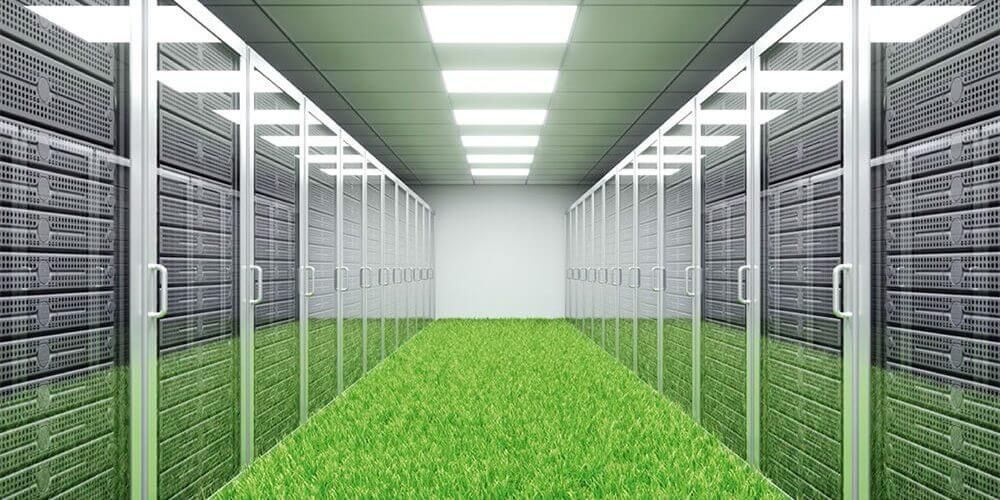
Our cloud platform operates from an eco data centre powered by renewable energy. The facility runs on solar energy, which is the single largest factor in the carbon footprint of any hosted workload — servers are, fundamentally, a way of turning electricity into computation and heat.
Water-cooled infrastructure
The data centre uses water cooling rather than conventional air conditioning. Cooling is typically the second largest consumer of energy in a data centre after the equipment itself, and water carries heat away far more efficiently than moving large volumes of chilled air around a room.
The practical result is a meaningful reduction in the energy required to keep the platform at a safe operating temperature.
Energy-efficient by design
The platform is built on an energy-efficient architecture that optimises how resources are used. In a well-designed environment, workloads are consolidated so that hardware runs at a sensible utilisation rather than sitting mostly idle and drawing power for nothing.
Efficiency of that kind is invisible to the people using it, which is rather the point.
Why any of this matters commercially
Environmental credentials used to be something a business mentioned in its values statement. Increasingly they are something it has to evidence.
Tender documents and procurement questionnaires now routinely ask about the carbon footprint of a supplier’s operations, and that question travels down the chain — if your customer is asked, you will be asked, and then you will ask us. Being able to answer with specifics rather than intentions is quietly useful.
There is a second, more prosaic benefit. Efficiency and cost move together. A platform that wastes less energy is cheaper to run, and that shows up in what it costs to host on.
Questions worth asking any cloud provider
Including us. Tick the ones you already know the answer to for your current provider.
The honest framing
We did not build this platform primarily to be green. We built it because owning the infrastructure means we can answer questions about it, fix things without raising a ticket with somebody else, and design it around what our clients actually need rather than what a global provider has decided to offer this quarter.
The environmental side is a genuine benefit of doing it properly rather than the reason for doing it — and we would rather say that plainly than dress it up.
If you want to know exactly where your data would sit, what it runs on, and what happens if you ever want it back, ask us. Those are questions we can answer specifically, which is more than most providers can manage.